
José Maria Martinez on Beekeeping and Honey in the Algarve
A World Made by Many
Meet Algarve beekeeper José Maria Martinez and learn how his family harvests natural honey while protecting the bees and countryside around Ombria.

José Maria Martinez has lived in the south of Portugal his whole life, working as a beekeeper for about five years, though bees have been part of his life for much longer than that. His grandfather kept about 100 hives as a hobby, and his father, catching the bug around age 15 or 16, turned it into something bigger. "A few years later, he decided to grow this business and make this his main source of income," José says. "And so far we have a thousand beehives. We've come very far." It's still a family operation with José, his father, and his brother, all working "towards the same objective, which is to grow the business,” he says.
Beekeeping in the Algarve Countryside
Most visitors to the Algarve never make it past the coastline because they’re so focused on the beaches. But the countryside has its own beauty, giving people direct contact with nature in a different way, and for him, that contact is specific to the hives themselves. Working with the bees just gives me a sense of calmness,” he says. You can enjoy everything around you: the view, the flowers, the trees.” Cork trees, olive trees, and carob trees fill the land around Ombria, but only two flowers really matter to the bees: orange blossom and lavender. He moves the hives seasonally to follow the bloom, orange trees first, then lavender, chasing a better honey harvest each time.

Ask him what makes bees remarkable, and José doesn't hesitate. "They are very intelligent," he says. "They can function on their own. They don't need a keeper. They are self-sufficient." He's blunt about what that actually means for someone in his position. "Most animals need to be taken care of. And of course, if you want the bees to have good production, you need to take care of them. But they don't need you." Every hive, he says, functions like a family: a queen laying eggs, younger bees feeding and tending the brood, older bees out collecting pollen, all of them working toward the same end. He sees an obvious parallel to his own family's business, and to the hotel. "Everybody's working together for the same goal."

His hands-on relationship with bees came with an unexpected complication: José used to be allergic to them. He spent five years traveling to Lisbon once a month for treatment, receiving increasing doses of bee venom until his body built up its own resistance. "They can sting me all they want now," he says. What kept him going through that process, and with the work itself, was watching his father do it first.
How José's Family Harvests Honey
A normal day starts before the heat sets in: out to the hives at sunrise, honey boxes brought home, extracted with the family's own machinery, then filtered and drummed for sale. When he opens a hive, the smoker isn't there to calm the bees. It's there to distract them. "Usually people assume that the smoke calms the bees down, but what it actually does is keep them busy," he says. "They think, where there's smoke, there's fire. So instead of coming out of the box to sting, they go inside and try to eat as much as they can, in case they need to leave." He works fast and gently once a frame is out, trying to disturb as little as possible. And nothing gets added to what comes out the other end. "We don't add anything to the honey," he says. "We just take the honey that's in the frame and put it in a jar." That restraint is deliberate. "Natural honey is what people want," he says. "If we added anything, it wouldn't be as good, and it would lose the perception of nature."
Sharing the Work of the Hive with Visitors
Beekeeping itself, he says, is a harder trade than it used to be. Diseases and parasites affecting hives have changed, treatment has gotten more demanding, and costs have climbed. "Beekeeping has been decreasing here in the Algarve because the cost of maintaining hives is getting higher," he says. That makes the moments he spends with visitors feel more important to him. Guests get the full arc: the hive itself, an explanation of how honey is actually made, and a taste straight from a fresh frame pulled that day.

He hopes people leave understanding that the process is so much bigger than honey. "Without bees, you don't have any fruit," he says. "They pollinate everything." He points out that some of the same visitors who marvel at the hives are unknowingly part of the problem elsewhere, putting pesticides on orange trees or tending to over-manicured gardens with nowhere for bees to live. His hope is that a morning spent watching bees work translates into something visitors carry home, leaving part of a garden wild, thinking twice about chemicals, understanding what's actually at stake.

Honey Harvesting in the Algarve: Meet the Work Behind the Jar
After hearing José's story, the next spoonful of honey may taste a little different. Orange blossom and lavender offer distinct aromas, but there's far more happening in the hive than most of us ever see.
Our Honey Harvesting Experience introduces you to the Algarve countryside through the people who tend its bees. Discover how a hive works, learn what goes into collecting honey, and taste the result of all that remarkable teamwork.
You may leave with a new favorite honey. More likely, you'll find yourself noticing the bees in your own garden with a different kind of respect. José would call that a success.
A World Made By Many: The Dinner Series at Viceroy at Ombria Algarve
On October 29, 2026, at 7 PM, we're gathering at Viceroy at Ombria Algarve for a special four-course dinner in our A World Made By Many Dinner Series.
The evening is a tribute to the ingredients, flavors, and culinary minds that make southern Portugal a destination for those who appreciate a good meal. It's an invitation to share the table with the people who know the region best, and to taste what happens when tradition meets a little imagination.
We look forward to welcoming you for an evening devoted to the Algarve and its people.

Discover What Has the Algarve Buzzing
José's story starts with bees, but it leads into a landscape of citrus groves, vineyards, and longstanding family traditions. At Viceroy at Ombria Algarve, we're happy to introduce you to everything that make this corner of Portugal worth knowing.
More Stories
A World Made by Many
Discover how Catarina and Mário Santos revived Quinta do Tourais and what their family's wines reveal about the Algarve countryside

A World Made by Many
Meet New York hairstylist and wig maker Timur Sadyq, whose work draws on observation, identity, and the people who shape the city.
A World Made by Many
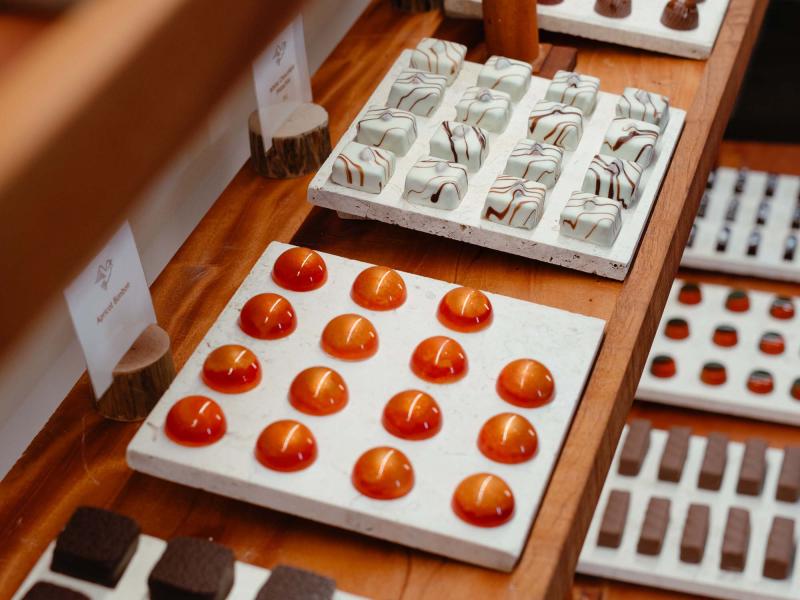
Follow chocolatier Kittle Symphorien from Saint Lucia cocoa pod to handmade chocolate, and discover the Sugar Beach chocolate-making experience.