
The Valley of the Pitons: The Heart and Soul of St. Lucia
Travel

Sugar Beach, A Viceroy Resort, at a Glance
Location: Sugar Beach (Soufrière), St. Lucia
Perfect For: Intimate getaways, families, honeymooners, art aficionados, nature lovers, and culinary enthusiasts. Anyone in search of a peaceful beach vacation where the mountains meet the sea.
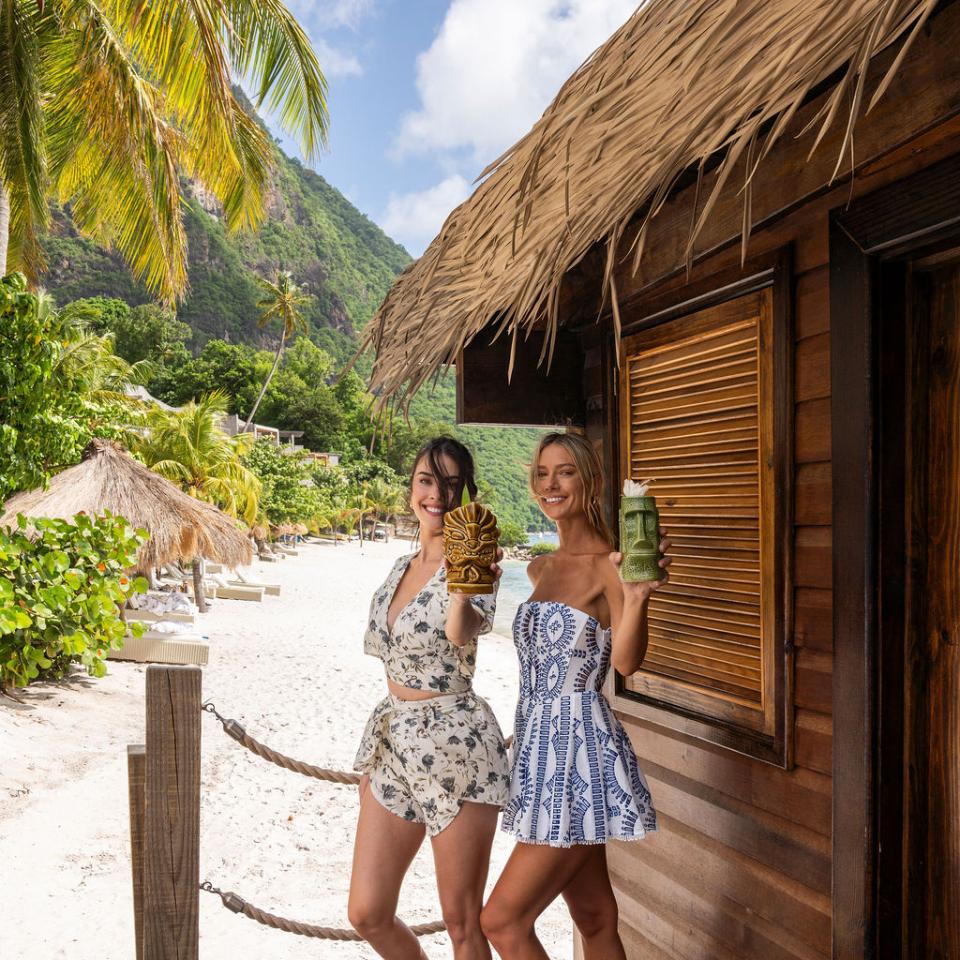
On-property highlights: The Rainforest Spa, a beachside pool, racquet club, water sports, full PADI® dive facility, kids club, pet-friendly accommodations, a chocolate boutique, a curated modern art collection, and 11 beachfront and ocean view dining experiences.
Nearby: Soufrière, the Tet Paul Nature Trail, and of course, the Pitons, the island’s famous mountainous volcanic spires.
Distance to Hewanorra International Airport (UVF): 1 hour (35.3 km/21.9 miles) to Vieux Fort.
At early dawn, when the sea is calm, the sun's golden light is framed by two towering volcanic peaks: Gros Piton and Petit Piton. The sun rises as the Pitons hold their place—above the rainforest, above the Caribbean Sea—for a view found only in St. Lucia and quite unlike anywhere else in the Caribbean.
It’s hard to imagine anything beyond this moment, and indeed, you shouldn’t. It’s the kind of moment that stays with you a while, your mind easily conjuring it from memory long after you leave. These two mountains are far more than landmarks, and sitting in the shadows of the Pitons is an experience that is felt with all the senses. Nowhere on St. Lucia is that presence felt more acutely than at Sugar Beach, a Viceroy Resort. While we’ve been soaking up this scene for 14 years, the land has borne witness to their monumental presence for much longer. To understand why just being here feels so powerful, perhaps it’s helpful to take a step back.

The Pitons: An Enduring Symbol of St. Lucia
Search for ‘St. Lucia,’ and chances are you’ll find plenty of images of these two forest-clad volcanic spires emerging dramatically from the sea. Few locations are as instantly recognisable by a set of striking geological features.
These are the Pitons, the UNESCO World Heritage-listed peaks that have defined St. Lucia's landscape for thousands of years, from long-ago seafarers to present-day tourists. They stand as iconically along the coast of the island as they do crowning the logo of the St. Lucia Tourism Authority. They’ve easily become a symbol of the country.

In the southwestern corner of St. Lucia between the towns of Soufrière and Choiseul, nestled between these iconic volcanic peaks, Sugar Beach, a Viceroy Resort, offers a front-row seat to one of the Caribbean's most extraordinary natural settings. But the Pitons are more than a famous view. If the stories of the Pitons could come to life, they would stand boldly at the intersection of geology, biodiversity, cultural memory, and human history of this beautiful place.
A Hotbed of Volcanic History
But what exactly are the Pitons, and where did they come from? In addition to being geological formations, iconic beacons, and cultural anchors, the Pitons are part of an arc of volcanic islands known as the Lesser Antilles in the West Indies. St. Lucia is made up almost entirely of volcanic rock, and the Pitons are the remnants of two lava domes formed 200,000–300,000 years ago. The entire area is known as Val des Pitons, a protected UNESCO World Heritage Site: 2,909 hectares of rainforest, marine reserves, volcanic features, historic estates, and some of the island's most spectacular scenery.
Other remnants of the island’s volcanic beginnings can be found across the island, namely Qualibou (also known as the Soufrière Volcanic Centre), an ancient active caldera still bubbling with geothermal activity, hot springs, pools, therapeutic mud baths, and the world’s only drive-in volcano at Sulphur Springs.
Under the Sea
This dramatic volcanic landscape also slips beneath the water, with a marine ecosystem every bit as compelling as the one above sea level. The marine life below ranges from parrotfish and barracuda to seahorses and southern stingrays. Nearly 60% of the marine area is covered by coral reefs, beautiful underwater ecosystems dazzling beneath the surface.

Up to the Sky
That’s an enormous amount of biodiversity for an island so small, as though it’s been blessed by the gods. Depending on who you ask, that just might be the case. Long before the Pitons were photographed, climbed, and added to brochures and postcards, they were revered as sacred.
The first known Indigenous people of St. Lucia were the Arawak, who migrated from the Orinoco River region of South America. They called the island Iouanalao or "Land of the Iguanas" and worshiped the Pitons as complementary, balancing forces. Gros Piton, once called Yokahu, honours the god of fire, thunder, and rain. Petit Piton, or Atabeyra, is the goddess of fertility, the moon, and the tides. Rising 2,619 feet and 2,438 feet respectively, summiting either peak feels not only like an astonishing physical feat, but a divine one as well.

Battle of the Colonies
While a French pirate was the first known settler to set up camp on St. Lucia in the 1550s, and France officially claimed the island in 1650, the island of Sancta Lucia appeared on a globe in the Vatican in 1520, suggesting an earlier Spanish claim. From there, lured by fertile, volcanic lands and abundant sugar crops, claims over the island volleyed between the French and the English in a dizzying back-and-forth, switching control approximately 14 times. To this day, English is the island’s official language, and St. Lucian Creole French is spoken by 95% of the population.
From Sugar Mills to Freedom
Abandoned sugar mills, plantation ruins, other historical landmarks—and even a town—mark the years that came before us. Traces of them remain in the form of foundations carved by time and crawling moss, punctuated among volcanic rocks, lush rainforest, and tangled roots. Fon Gens Libre, a community at the base of Gros Piton, translates to “Valley of the Free People,” and is named for the brigands, St. Lucia’s freedom fighters, who rebelled against the British and sought safety, solace, and shelter in Gros Piton, its lush forest and challenging terrain a natural hideaway.
A Modern Day Beach Escape
From these imposing masses emerges a centuries-long dance between a land and its people, long inspiring painters, poets, and travellers. Today, a rainforest, coastal habitats, coral reefs, and marine life converge at this meeting point between mountain and sea. Sugar Beach, A Viceroy Resort, sits blissfully at this crossroads. Sitting under the shadows of the Pitons, our surroundings feel humbling and peaceful. Days move slower, your senses are heightened, and the setting begs to be taken in one moment at a time: birdsong in the trees at dawn, the light moving across the peaks as the day edges on, wafting scents of salt, jasmine, and nutmeg hanging in the air. You not only experience a connection to nature here, you deepen it.
Experiencing the Pitons with Viceroy
A Lesson in Rituals: Rainforest Spa
Start at The Rainforest Spa, nestled beneath Petit Piton, where treehouse treatment rooms rise into the rainforest canopy, with a winding stream below. Here everything is shaped by and connected to the extraordinary setting, from treatments grounded in ancient traditions to the restorative properties of volcanic minerals and the richness of locally grown cocoa. A sense of calm comes over you easily here. Falling in sync with the landscape, warming bamboo massages, mineral-rich therapies, and restorative facials are guided by nature and delivered within the serenity of the rainforest. Beyond the rainforest cover of the spa, even a game of pickleball is transformed into something else entirely, the peaks of the Pitons watching over every play.
To the Top: Gros Piton Hike
Match the energy of the mountains with a 2.9-mile out-and-back hike up Gros Piton, through verdant rainforest from Fond Gens Libre, with a guide who knows the plants, birds, and stories as well as the path ahead. Climb over boulders and roots, past caves and up into the lush misty forest as you ascend to the peak. A climb that’s not for the faint of heart, the reward is worth the work: a breathtaking view from the summit where, on a clear day, you can see the island of St. Vincent. With picturesque stops at Au Poye Park and the valley of Fond Gens Libre, you don’t even have to wait for the summit to reap the benefits.
As an extra reward, book your hike with a luxurious recovery session at Rainforest Spa. For something a little more approachable, embark on the Tet Paul Nature Hike through the verdant farming community of Chateau Belair, not to climb the Pitons, but for breathtaking views of them.
Bird’s Eye View: Canopy Zipline
Take a canopy zipline through giant banyans, coconut, plum, and mango trees and a shaded bamboo gorge in the shadow of Petit Piton, and marvel at views of historic Soufrière and the sea.
The View From Here: Sail Out to Sea
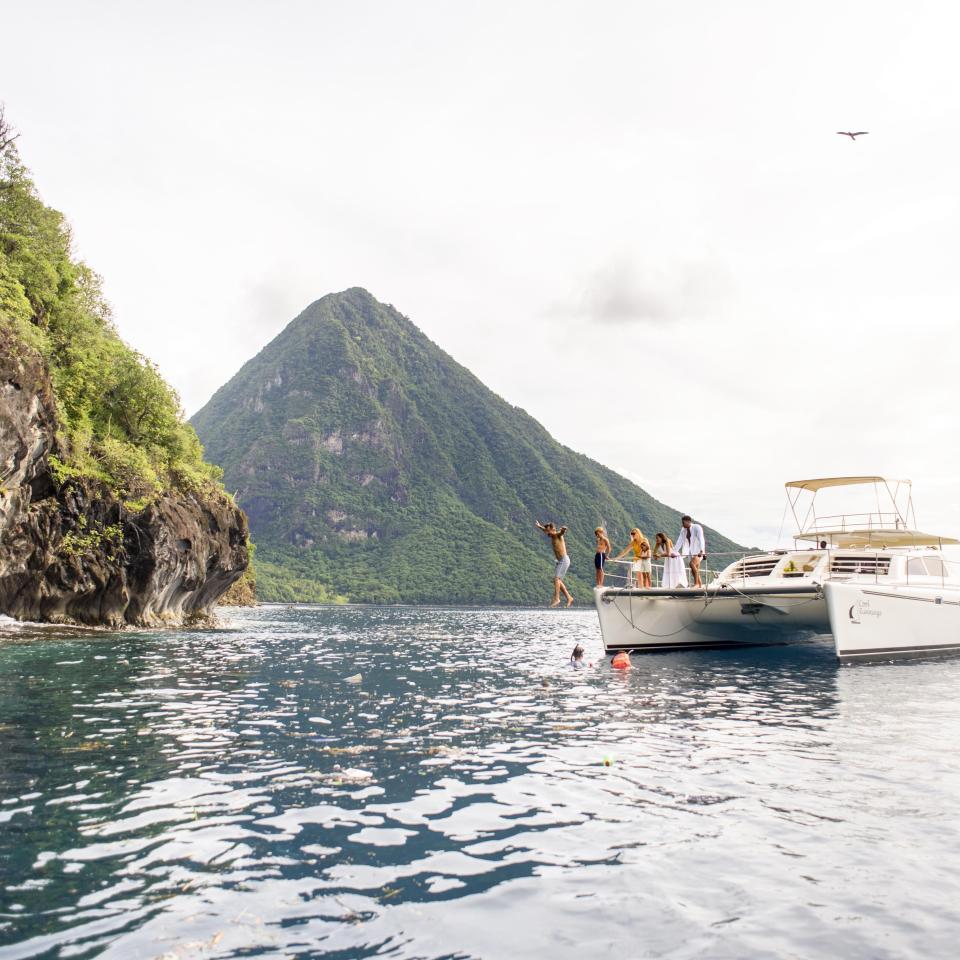
Take the Pitons in from an entirely different perspective—out on the water. Explore the ocean by catamaran for spectacular views of the island and our celebrated peaks, capped by a relaxing swim, or take a memorable sail at sunset, the peaks catching the last light of the day. Or surround yourself with vibrant marine life against the stunning backdrop of the Pitons on an unforgettable guide scuba dive just off the shore of Sugar Beach. No experience is required, curious first-timers are welcome.
Part of the Famous Landscape
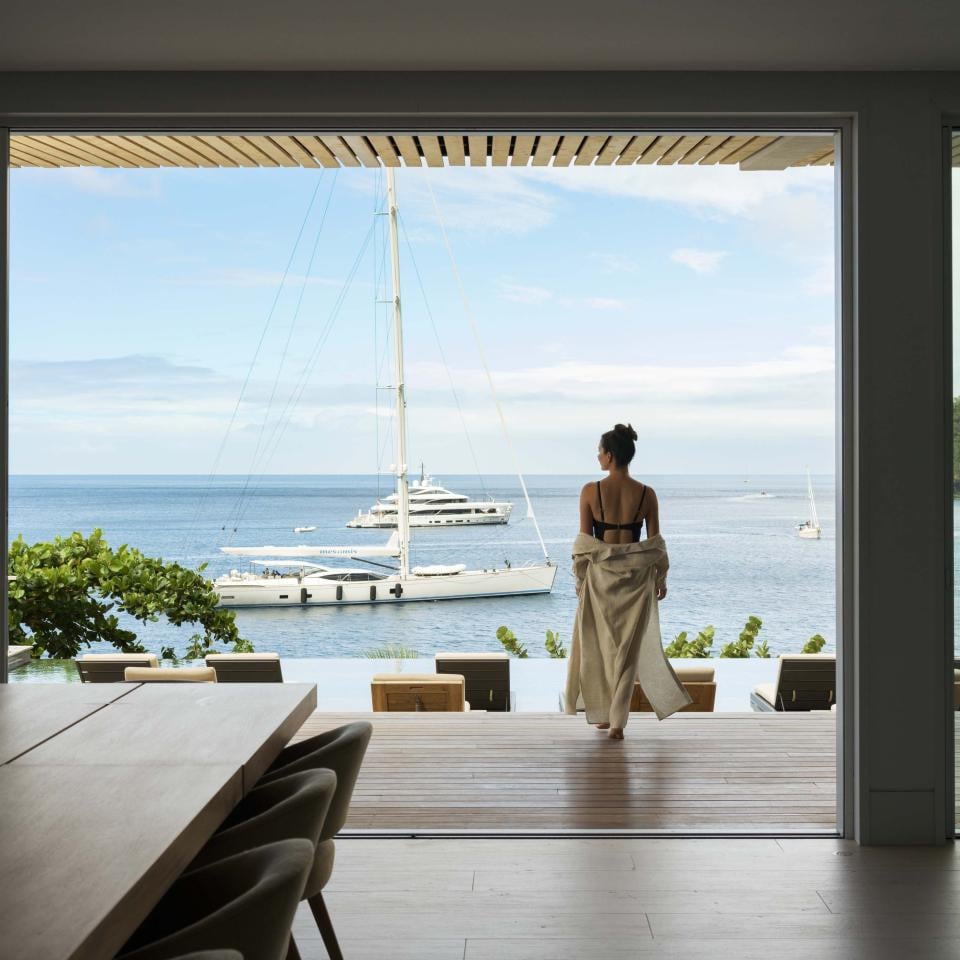
Some landmarks are admired from afar. Here at Sugar Beach, A Viceroy Resort, you wake up beside them. The Pitons rising through the clouds, rainforest reaching toward the sea, and a crescent of soft white sand stretching in between.
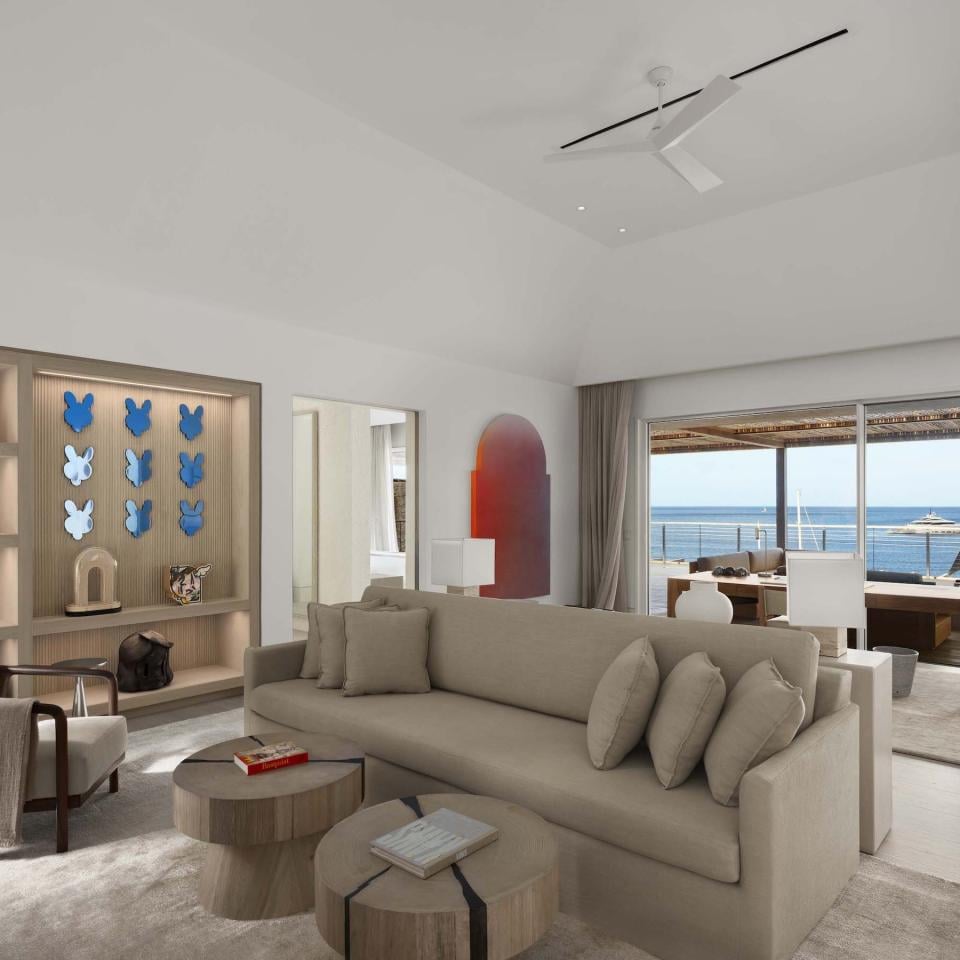
From rainforest to reef, the Pitons touch nearly everything you do here, whether a romantic dinner on the beach at their base, a scramble to the formidable summit, or simply a quiet view from your terrace.
The Pitons have shaped the island’s geography, history, and spirit for thousands of years. We welcome you to slow down, look up, and make them a part of your story, too.

In the Stillness of the Pitons: Sugar Beach, a Viceroy Resort
Seeing is believing—and feeling. Experience one of St. Lucia’s most meaningful landscapes from within it and see for yourself. Plan your next beach vacation at a place framed by one of the world’s most famous views.
More Stories
Travel
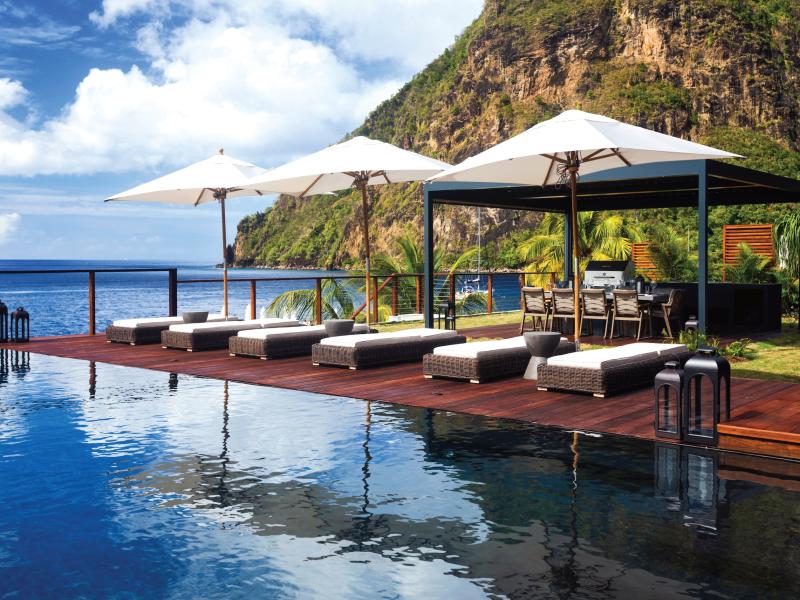
Ready to craft your own island story? These four breathtaking accommodations provide the perfect setting.
Travel
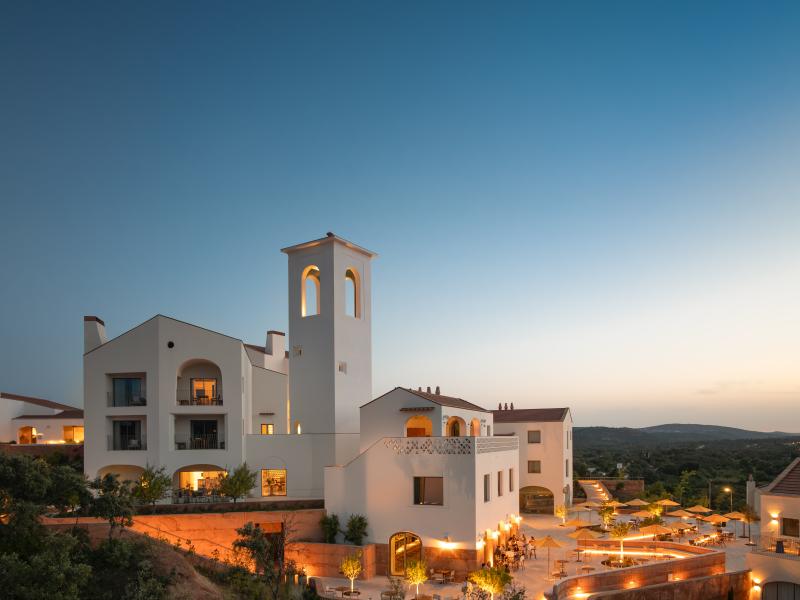
Uncover a world of authentic local experiences at Viceroy at Ombria Algarve. This 3-day Algarve Portugal itinerary takes you from golf and spa to nearby Loulé.
Travel
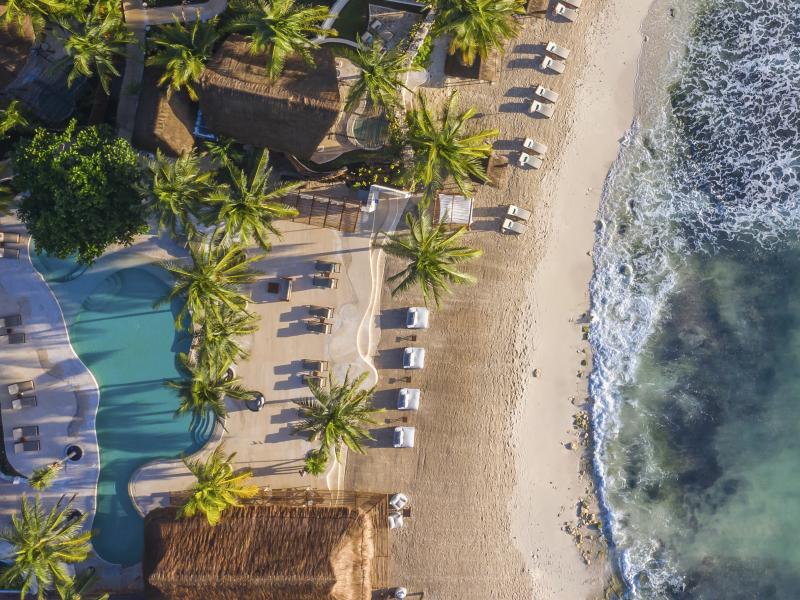
Soft sand, warm sun, a beach vacation that feels worlds away from the everyday. When you close your eyes and think of that perfect stretch of sand, some elements are a given. But Viceroy’s beach escapes open your eyes to a different world, each with a distinct soul.